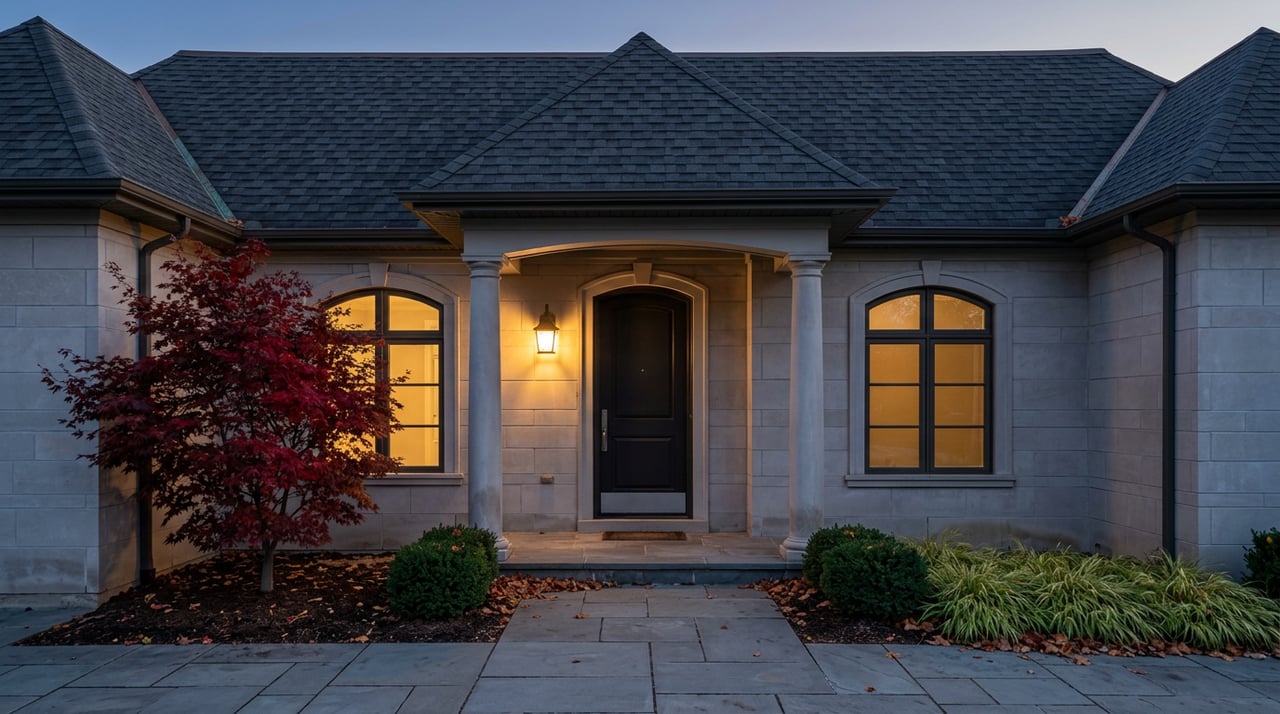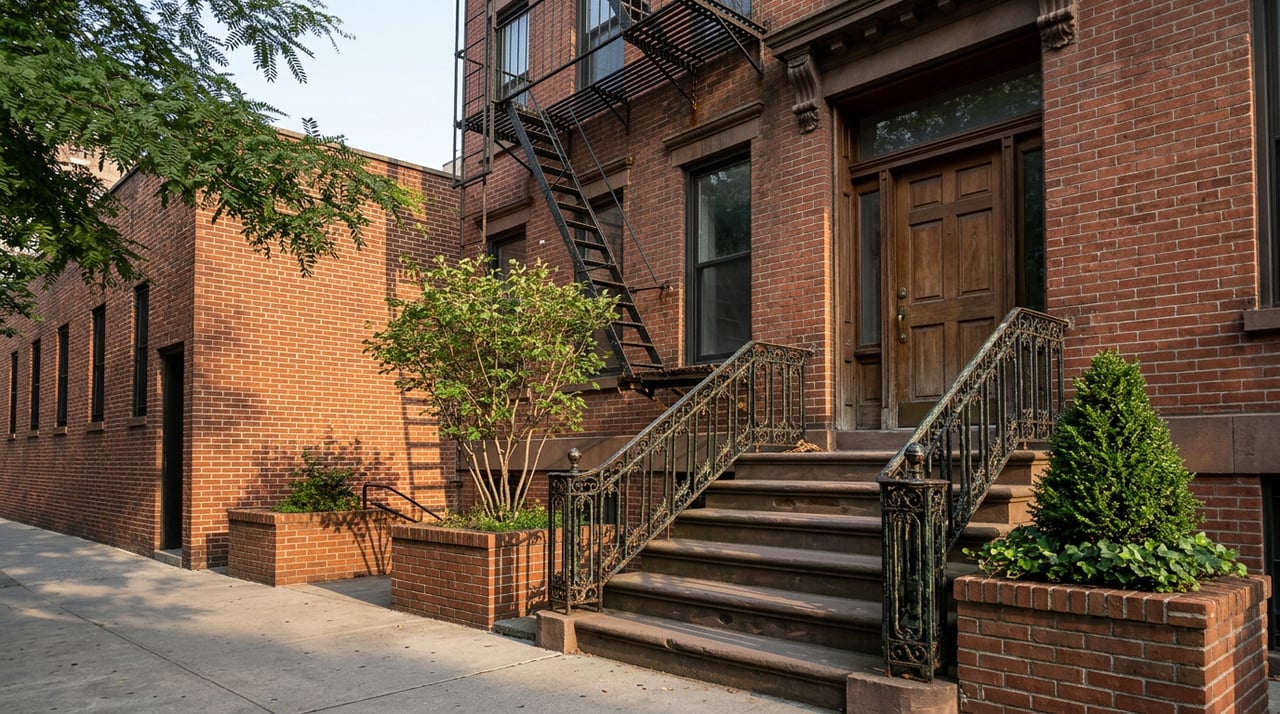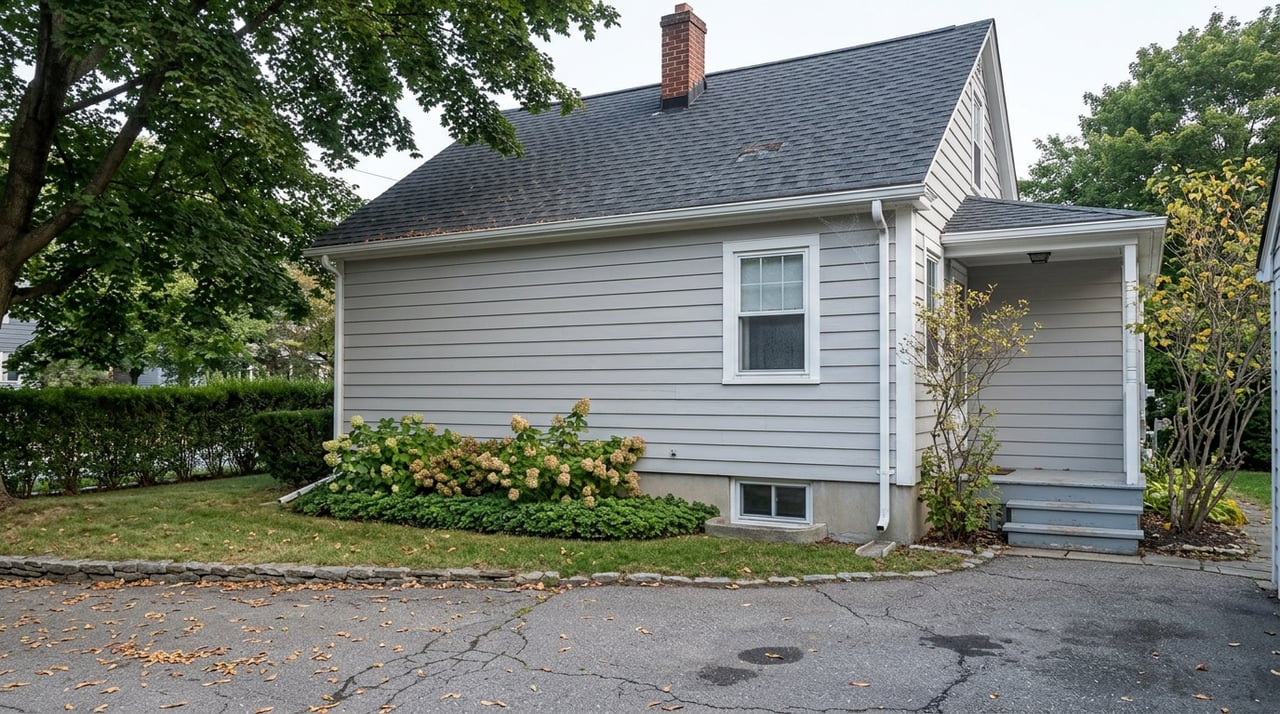
What happens when two buyers agree to pay the exact same price for a home in Bloomfield and still end up owing the township two completely different amounts every year? It happens more often than any portal's median-price headline would suggest, because Bloomfield isn't one housing market wearing one zip code. It's two, split by a line drawn directly into the zoning code, and that line changes what "a good deal" actually means depending on which side of it you're standing on.
One Bloomfield is the town most people picture: pre-war Colonials and Tudors in sections like Brookdale, Oakview, Watsessing and Demarest, assessed the old-fashioned way, taxed on the full value of the land and the structure. The other Bloomfield is newer and smaller, clustered mostly around the downtown train station, where developers have negotiated fixed annual payments to the township instead of standard property taxes. Both sell under the same "Bloomfield, NJ" heading. They do not carry the same math.
Same Price, Different Zone
The split isn't a marketing distinction. It's written into Bloomfield's own tax code. Under the township's ordinance governing tax agreements, the council can approve exemption and abatement deals for projects in nearly any zone in town, with one specific carve-out: it cannot do so in the Single-Family Zones, labeled R-1A, R-1B, R-2A and R-2B, or in Public and Public/Recreational zones. In plain terms, a detached single-family home in Brookdale or Oakview is legally ineligible for the kind of tax deal that a new apartment building near the station can get. The abatement mechanism is structurally confined to multi-family and commercial redevelopment parcels, which in Bloomfield means downtown and the corridors near it.
That's why a buyer looking at a starter Colonial a few blocks off Broad Street and a buyer looking at a new-construction unit near the Bloomfield NJ Transit station aren't just choosing between two floor plans. They're choosing between two different relationships with the township's tax collector, one fixed by ordinance and one negotiated deal by deal.
What the Spring Market Did to Both Sides
Neither side of that split has been sitting still. Bloomfield's second quarter of 2026 was active by any measure: home prices rose 5% during the quarter, 124 homes sold, and the typical listing found a buyer in 34 days, according to TAPinto's local coverage of the quarterly numbers. By July, the median sale price stood at $577,000, with homes selling in a median of 21 days, three days faster than the same month a year earlier, per Movoto's market tracking.
The more interesting number is what happened to the gap between asking price and sale price. Across Essex County towns this spring, list-to-sale ratios climbed as competition intensified, and Bloomfield was part of that pattern, moving from roughly 104% of asking to 113% by the second quarter of 2026. That's a town where sellers are pricing below what they expect to get, then letting a competitive buyer pool bid the number up rather than pricing at their real target from day one.
This matters for the two-Bloomfield split because it changes the stakes of comparing properties quickly. A buyer chasing a Brookdale Colonial in a bidding war has limited time to also dig into a fixed municipal tax number they already understand. A buyer chasing a downtown PILOT unit under the same time pressure has even less bandwidth to ask what "in lieu of taxes" actually means for their monthly number, or how long the current arrangement runs before it doesn't.
The Deal Nobody Explains at the Open House
A PILOT, short for payment in lieu of taxes, is exactly what it sounds like: instead of paying the standard municipal, county and school tax rate on a property, the owner pays a fixed annual charge to the township, negotiated in advance. Bloomfield has used these agreements to help finance the wave of construction near its downtown and train station over the past decade, and the township has held its own public sessions specifically to walk residents through how the arrangement affects the municipal budget, according to Patch's coverage of one such webinar in April 2025.
The scale of these deals can run long. Back in 2019, when Bloomfield's Planning Board took up a proposal for a 210-unit building plus townhouses in the town's redevelopment zone, the tax exemption on the table ran as long as 35 years, structured so the developer would pay an annual service charge in place of conventional property taxes for most of that span, as Jersey Digs reported at the time. That's not a one-year discount. That's most of a mortgage's lifespan spent under different tax rules than the house three blocks away.
None of this makes a PILOT unit a worse buy. For a lot of buyers, especially first-time purchasers or commuters prioritizing a short walk to the platform, a predictable service charge can be easier to plan around than a traditional tax bill that moves with municipal budgets and reassessments. The problem isn't the mechanism. It's that a listing sheet rarely spells out which years of the abatement schedule you're buying into, what the payment steps up to as the agreement matures, and what happens to your tax bill the year the deal expires and the property reverts to full assessment.
What This Means If You're Comparing Two Listings
If you're weighing a legacy single-family home against a newer PILOT property at a similar price point, a few questions do more work than the sticker price:
- Ask for the property's current annual payment, whether that's a standard tax bill or a PILOT service charge, and get it in writing rather than relying on an estimate.
- If it's a PILOT, ask how many years remain on the agreement and whether the payment is flat or scheduled to increase.
- Ask what the assessed value would be without the abatement, so you can estimate what the bill looks like after the agreement ends.
- Compare that number against a comparable single-family home's current tax bill in Brookdale, Oakview, Watsessing or Demarest, since those figures are already fixed by ordinance and won't shift the way a PILOT schedule can.
- Factor in the building's age and system condition. A pre-war Colonial with an aging roof or furnace carries its own version of a deferred cost, just one that shows up as a repair bill instead of a tax adjustment.
That last point isn't hypothetical for Bloomfield's older housing stock. Much of it predates World War II, and the township itself recently acknowledged as much. In June 2026, Bloomfield selected an administrative agent to run a new Home Improvement Program that offers income-qualified homeowners up to $25,000 as an interest-free, forgivable loan for major system repairs, covering things like roofing, HVAC, electrical and plumbing. It's a municipal response to a real pattern: older homes in sections like Brookdale and Oakview need capital investment that new PILOT construction simply doesn't carry yet.
Two Towns, One Zip Code
None of this is an argument for one Bloomfield over the other. A three-bedroom Colonial near Brookdale Park, which shares its 121 acres with neighboring Montclair, offers a different life than a one-bedroom unit a four-minute walk from the downtown platform. Both are legitimate reasons to live in Bloomfield. The point is that the median price you see on a search result doesn't tell you which Bloomfield you're looking at, and in a market where homes are selling in the low 20s for days and drawing bids well above asking, you don't have much time to figure that out on your own once you're in a bidding war.
A quick FAQ on Bloomfield's tax structure:
Does a PILOT agreement transfer to a new owner when the property resells? Yes, the agreement runs with the property, not the original owner, so a buyer purchasing a unit mid-agreement inherits whatever years and payment terms remain on the deal.
Can a single-family home in Bloomfield ever get a PILOT? Not under the current ordinance. The code specifically excludes the township's Single-Family Zones, R-1A, R-1B, R-2A and R-2B, from tax agreement eligibility, which is why these arrangements show up almost exclusively in downtown and multi-family redevelopment parcels.
Bloomfield rewards buyers who know which market they're actually in before they write an offer. If you're weighing a legacy home against new construction, or trying to figure out what a specific PILOT schedule means for your real monthly cost, The Hudson Essex Collection can pull the actual tax history and agreement terms on both sides of a comparison before you commit. Reach out to get your instant home valuation and a straight answer on what a given Bloomfield address will actually cost you to own.