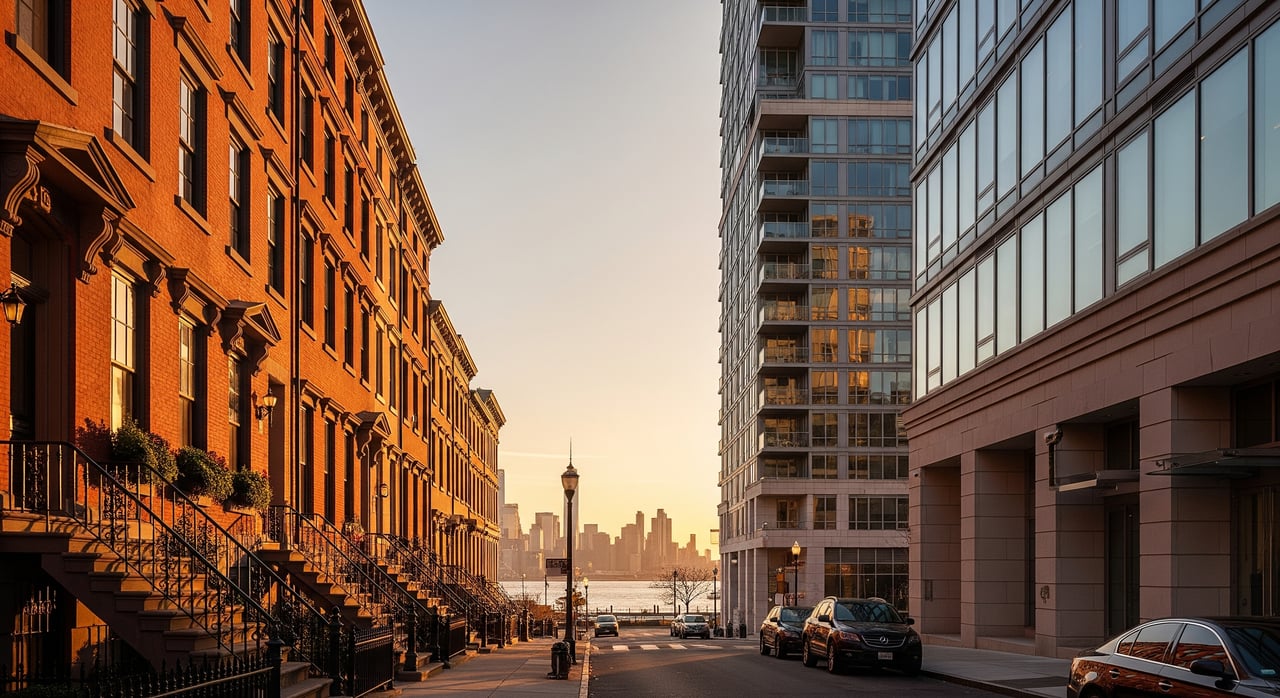
Trying to choose between a condo and a townhouse in Hoboken? You are not alone. Both home types are popular here because they deliver walkable, transit-friendly living near Manhattan, but they work very differently when it comes to ownership, fees, financing, and maintenance. In this guide, you will learn the key differences, Hoboken-specific factors to weigh, and practical checklists to help you move forward with confidence. Let’s dive in.
Quick definitions
What is a condo
A condominium is a legal form of ownership. You own your individual unit, usually the interior space, plus a shared interest in the building’s common elements like the roof, hallways, and grounds. A condo association manages the building using a master deed, bylaws, rules, and an operating budget.
What is a townhouse
“Townhouse” has two meanings in Hoboken:
- Fee-simple townhouse: You own the land and the entire structure inside and out, including the roof and yard. There may be little or no HOA.
- Townhouse within a condo regime: Each townhouse-style unit is owned like a condo, with an association that manages shared elements. From a governance standpoint, it functions like a condo.
What to review before you buy
If there is an association, ask for and review:
- Declaration or master deed
- Bylaws and rules
- Budgets, financial statements, and any reserve study
- Meeting minutes and any pending litigation disclosures
Ownership and control
With a fee-simple townhouse, you have greater control over your property. You decide on exterior work, subject to city rules, and you cover your own maintenance. There may be minimal shared rules if no HOA exists.
With a condo or townhouse-as-condo, decisions about the building happen through the association. You pay regular dues for shared services and reserves, and you follow building rules that can affect renovations, leasing, and use of common areas.
Costs and monthly fees
Purchase price basics
In many near-NYC markets, fee-simple townhouses often command a premium per square foot versus condos. This reflects land ownership, perceived privacy, and multi-floor layouts. In Hoboken, pricing varies widely by block, transit access, flood exposure, and building age or amenities. Entry points and sizes often start lower with condos, while townhouses skew larger.
HOA or condo dues
Condo dues fund exterior and structural maintenance, common-area utilities, management, building insurance, amenities, and reserves. Amounts depend on the age of the building and its features. Townhouse communities can have zero, modest, or full-service HOA fees. If you own fee-simple, you do not pay a condo fee, but you cover all upkeep yourself.
Taxes and insurance
Property taxes are based on assessed value and local rates set by Hudson County and the City of Hoboken. Assessed values differ by property and can vary between condos and townhouses.
Insurance needs also differ:
- Condo owners typically carry an HO-6 policy for interior finishes, personal property, and personal liability. The association carries a master policy for common elements, but coverage varies. Confirm whether it is walls-in or all-in, and note the master policy deductible.
- Fee-simple townhouse owners typically carry an HO-3 policy that covers the structure, contents, and liability.
- Flood insurance is a key consideration in Hoboken. Many properties sit in or near FEMA-designated Special Flood Hazard Areas. If the home lies in such a zone, lenders will require flood insurance. Get quotes early so you understand premiums and requirements.
Special assessments
Both condos and townhouse associations can levy special assessments if reserves are not adequate for major repairs, such as roof or façade work. Review reserve studies, recent budgets, and meeting minutes to gauge risk.
Financing and resale
Mortgage differences
Lenders treat fee-simple townhouses like single-family homes, which is usually straightforward. Condo loans include extra project-level reviews. Lenders check the building’s financial health, reserves, owner-occupancy ratio, concentration of investor ownership, litigation, and more. Some loan programs, like FHA and VA, require the project to meet specific criteria.
Loan programs and terms
Both condos and townhouses can be eligible for conventional, FHA, VA, and other loan types, subject to project requirements for condos. Ask your lender early about the building’s status and paperwork so you do not face surprises late in the process.
Resale dynamics in Hoboken
Condos create larger pools of comparable units in multi-unit buildings. That can mean more direct competition when you resell, and values can be sensitive to the building’s management and finances. Fee-simple townhouses are often scarcer, which can support resale for buyers who want more privacy, multiple floors, and outdoor space. In both cases, location, flood risk, transit access, parking, and building or structure condition drive value in Hoboken.
Hoboken factors to weigh
Flood zones and mitigation
Hoboken is low-lying and has seen coastal and storm-surge events. Check the flood zone status for any address you consider. Ask about elevation, any flood-hardening work, raised utilities, flood vents, and the age of mechanicals. These details affect insurability, premiums, and long-term value.
Parking and transit
On-street parking can be tight. Many condo buildings offer deeded or paid garage spaces. Townhouses may have garages or rely on permit street parking. Evaluate how a parking space, or lack of one, fits your lifestyle. Proximity to PATH, ferries, and buses is also a major value driver.
Historic rules and permits
Certain Hoboken blocks fall under historic preservation rules. Exterior changes to townhouses, especially in historic areas, often need city approval. Condo associations also control exterior modifications. If you plan to add a roof deck or dormer, confirm zoning, setbacks, and association rules before you buy.
Short-term rentals and leasing
Hoboken has ordinances that regulate short-term rentals. Many associations also limit rentals or set minimum lease terms. If you are buying as an investor or want future flexibility, review municipal rules and association documents early.
Utilities and services
Some condos include shared utilities like heat or water in monthly dues, especially in baseboard-heated buildings. Fee-simple townhouse owners pay all utilities directly. Ask how utilities are metered, what is included in dues, and how costs are allocated.
Maintenance and inspections
Structural responsibility
Condo owners are responsible for the interior of the unit, while the association handles the structure, roof, façade, and common systems. Fee-simple townhouse owners cover the entire building and site, including the roof, foundation, and exterior surfaces.
Reserves and deferred work
A healthy reserve fund helps avoid special assessments. Carefully review reserve studies, capital plans, and recent budgets for condos and townhouse HOAs. For fee-simple townhouses, build your own capital plan for the roof, masonry, windows, and mechanical systems.
Inspection focus by property type
For condos, get a detailed unit inspection and ask about building-level items such as roof age, façade repair history, elevator servicing, and any water intrusion issues. For townhouses, request a full home inspection that covers the foundation, roof, mechanical systems, and party walls if attached.
Which fits your lifestyle
A condo may suit you if
- You want low-maintenance living with predictable monthly costs.
- You value amenities like a gym, elevator, concierge, or package room.
- You prefer a smaller footprint close to transit and shops.
A townhouse may suit you if
- You want private outdoor space and multiple levels.
- You prefer more control over the exterior and a single-home feel.
- You need more bedrooms or flexible space for work and storage.
Buyer checklist
- Confirm the ownership type, fee-simple townhouse or condo regime.
- Review the declaration, bylaws, rules, budgets, reserve study, insurance certificate, meeting minutes, and any litigation disclosures.
- Ask about the master insurance policy scope and deductible, and confirm what you must insure.
- Verify flood zone status and request flood insurance quotes early.
- Confirm parking, storage, and proximity to PATH, ferry, and bus stops.
- Order a full inspection, including moisture or flood-history checks for low-lying areas.
- Check city short-term rental rules and any association rental restrictions.
- Ask your lender about condo project requirements and loan program availability.
Seller prep list
- Gather association documents and recent meeting minutes for buyers.
- Disclose any flood history or repairs, and provide permits for renovations.
- Review association rules on showings, open houses, and repair obligations.
- For townhouses, collect recent estimates for likely capital items such as the roof or façade.
Making your decision in Hoboken
Choosing between a condo and a townhouse in Hoboken comes down to how you want to live, what you want to control, and how you plan to manage costs and maintenance. Condos streamline exterior upkeep and often bring amenities, while fee-simple townhouses offer space, privacy, and autonomy. In both cases, flood risk, parking, and building or structure condition deserve a careful look.
If you want a clear, side-by-side view of your options and local guidance from offer to close, reach out to the team at The Hudson Essex Collection. We help you weigh tradeoffs, interpret association documents, and negotiate with confidence.
FAQs
What is the core ownership difference between Hoboken condos and townhouses?
- Condo owners hold title to the unit interior plus a share of common elements, while fee-simple townhouse owners hold title to the land and entire structure. Some townhouse communities are set up as condos, which follow association governance.
How do HOA or condo fees compare in Hoboken?
- Condo dues cover shared services, building insurance, and reserves. Fee-simple townhouses may have no HOA fee, but owners pay for all maintenance directly. Townhouse communities with HOAs can have modest to full-service fees.
Who pays for roof and structural repairs in each property type?
- In most condos, the association is responsible for the roof, structure, and common systems. Fee-simple townhouse owners pay for their own roof, façade, and foundation.
Are condo mortgages harder to obtain than townhouse loans?
- Condo loans include project-level reviews of the building’s finances, reserves, occupancy ratios, and litigation, which adds steps. Fee-simple townhouses are underwritten like single-family homes, which is usually simpler.
How does Hoboken’s flood risk affect insurance and financing?
- Homes in Special Flood Hazard Areas require flood insurance for most mortgages, and premiums vary by elevation and mitigation steps. Get quotes early and include flood-hardening factors in your inspection.
Can I rent my condo or townhouse, or use it for short-term rentals in Hoboken?
- Many associations limit rentals or set minimum lease terms, and the city has short-term rental rules. Review municipal code and association documents before you buy if renting is important to you.
How does parking differ between condos and townhouses in Hoboken?
- Many condos offer deeded or paid garage spaces, while townhouses may have garages or rely on permit street parking. Parking access is a major factor in daily convenience and resale.
Which tends to appreciate more in Hoboken, condos or townhouses?
- Both can appreciate well. The bigger drivers are location, flood risk, building or structure condition, transit access, parking, and building management, rather than the label alone.