If you have ever scrolled South Orange listings and thought, "These homes all look beautiful, but what does that actually mean for me as a buyer?" you are asking the right question. In South Orange, style is not just about curb appeal. It often hints at layout, upkeep, renovation complexity, and even what questions you should ask before making an offer. This guide will help you read South Orange home styles more clearly so you can tour smarter, budget more confidently, and focus on the homes that truly fit your goals. Let’s dive in.
Why South Orange Has So Much Character
South Orange has a distinctly older housing pattern, and that shapes the buying experience. The Village describes itself as a residential community known for authentic Tudor, Colonial, and Victorian homes, with that development history tied to the Morris & Essex Railroad and the area’s evolution into a suburban rail community after service reached Hoboken in 1868.
That history still shows up in today’s inventory. According to the Village’s housing plan using 2015 to 2019 ACS data, 47.3% of South Orange homes were built in 1939 or earlier. An earlier Village smart-growth plan also noted that more than half of housing units were built before 1940 and 82% before 1960.
For you as a buyer, that means South Orange usually feels more like a prewar, character-rich market than a town of newer subdivisions. It also means many homes come with architectural details, older systems, and renovation considerations that deserve a closer look.
Why Newer Homes Are Less Common
South Orange is also largely built out. The Village’s planning documents state that less than 1% of land outside rights-of-way was vacant, and future residential growth would mostly come through redevelopment of already developed sites.
That matters because newer construction is relatively limited. When a newer home does come to market, it is more likely to be infill or redevelopment rather than part of a large new subdivision. In practical terms, buyers often choose between older homes with architectural character and scarcer newer options with more current layouts and systems.
Colonial Homes: Often the Easiest to Read
What Colonial Revival homes look like
Colonial Revival homes reinterpret earlier Federal and Georgian designs rather than copying them exactly. Common features include symmetrical façades, front porches and entries, columns or pilasters, fanlights or sidelights, and gabled or pedimented windows.
You may also see Palladian windows and a generally balanced exterior appearance. In a listing, that kind of symmetry often signals a home that feels orderly and straightforward.
What Colonials may mean for buyers
Among South Orange’s older housing styles, Colonials are often the easiest to understand from a layout perspective. National Park Service references note that period-revival houses generally had larger, more robust forms and more open plans with fewer, larger rooms than the earlier houses they drew from.
For you, that can translate to a clearer room structure and a floor plan that feels more familiar than a highly irregular Victorian. At the same time, these are still often prewar homes, so it is wise to look past the graceful front door and ask about electrical, plumbing, insulation, and other behind-the-walls updates.
Tudor Homes: Strong Style, More Complexity
What Tudor Revival homes look like
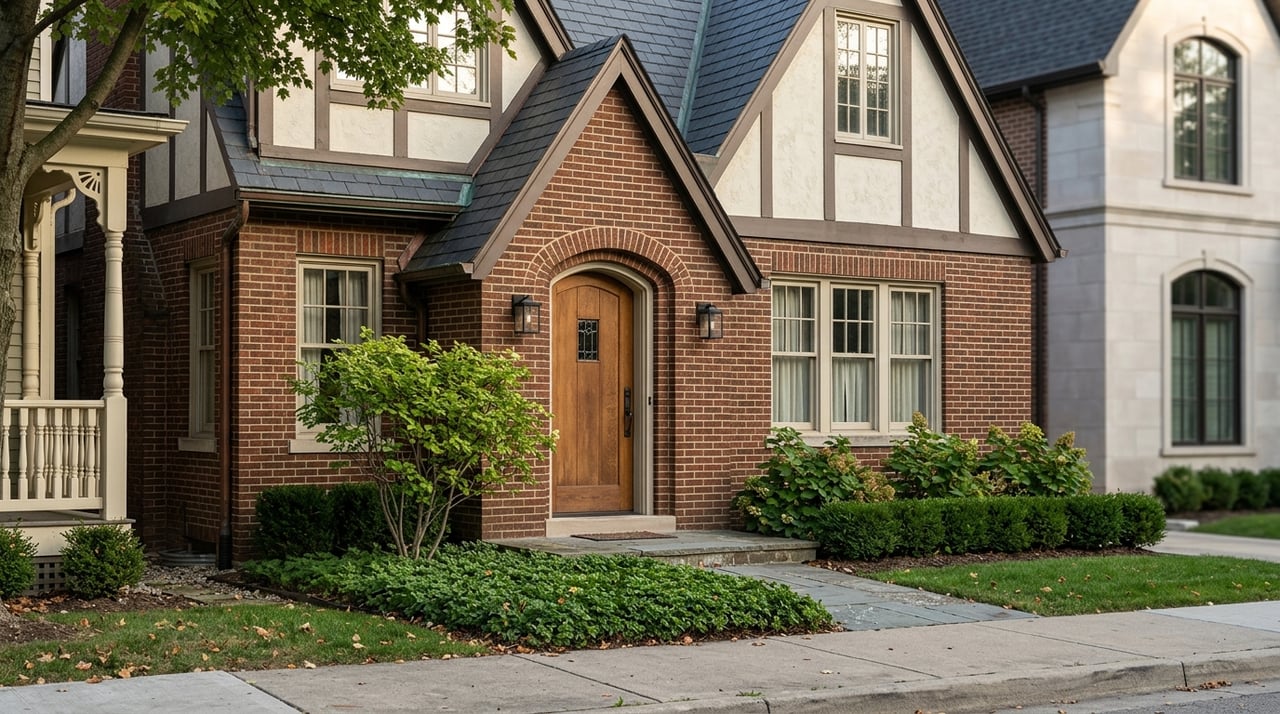
Tudor Revival homes are some of the most visually distinctive properties in South Orange. Typical features include decorative half-timbering, mixed exterior materials, asymmetrical massing, steeply pitched roofs with cross gables, prominent chimneys, and narrow multi-pane or casement windows.
Some Tudor variants also have sweeping rooflines and off-center entrances. These details often create memorable curb appeal and a storybook look that many buyers love.
What Tudors may mean for buyers
That exterior character often comes with added complexity. Compared with a simpler Colonial, a Tudor may have a more intricate roofline, more masonry detail, and a more involved exterior envelope.
If you are considering updates, that matters. Renovations involving dormers, window openings, stucco, or masonry may require especially careful planning, particularly in a town where preservation review can affect exterior work. A Tudor can be a wonderful fit if you appreciate architecture and are prepared to evaluate maintenance and renovation needs carefully.
Victorian Homes: Big Personality, More Variables
What "Victorian" usually means in South Orange
In South Orange, Victorian is often used as a broad label for late-19th-century picturesque homes rather than one exact format. A major style within that era is Queen Anne, which the National Park Service describes as typically asymmetrical and often marked by wrap-around porches, turrets, spindlework, angled roof brackets, mixed exterior materials, and multi-pane or stained-glass windows.
South Orange’s own history highlights Victorian homes as part of the Village’s identity. The Montrose Park National Register listing also identifies Queen Anne, Colonial Revival, and Shingle Style within that district.
What Victorians may mean for buyers
Victorian homes often offer some of the most distinctive curb appeal in town. They can also be the most idiosyncratic from a floor-plan and maintenance standpoint.
For buyers, that may mean charming original details, unusual room shapes, and exterior elements that require more ongoing attention. If you fall for a Victorian, it helps to tour with both your heart and your checklist.
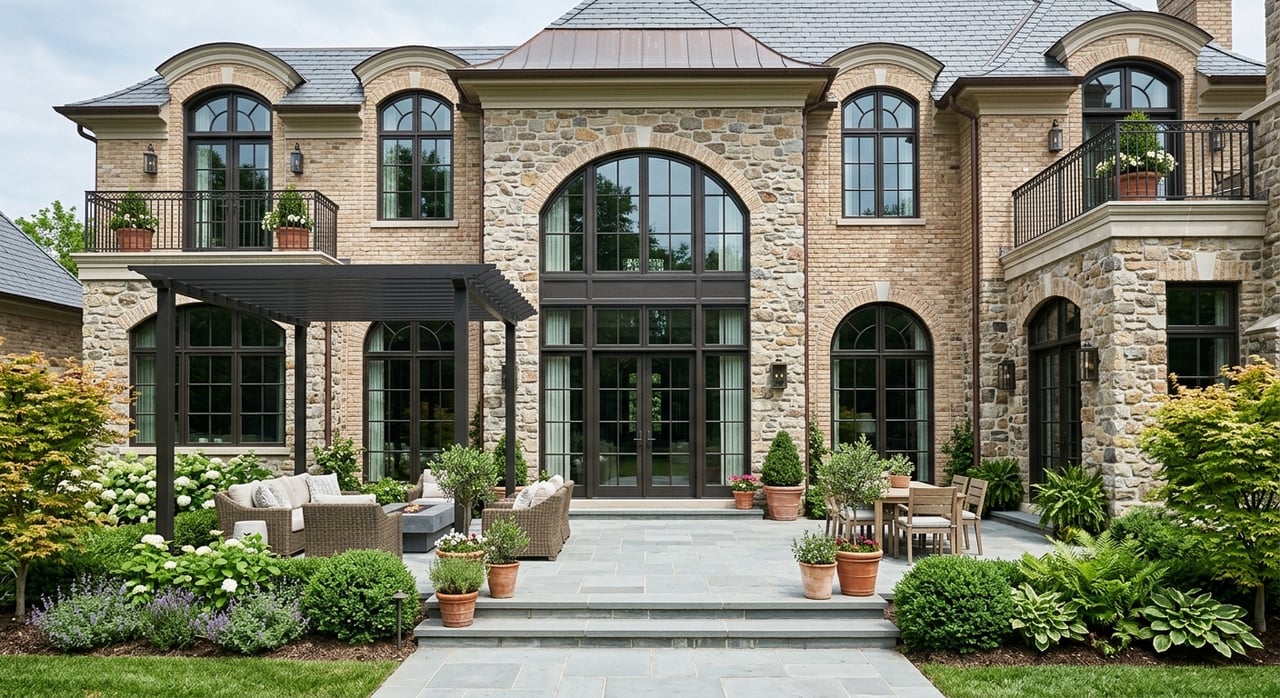
Newer Construction: Rare but Straightforward
Why newer homes stand out
Because South Orange is overwhelmingly developed, newer homes are usually the exception rather than the rule. Village planning documents indicate that future growth is expected mainly through redevelopment, not large-scale expansion onto vacant land.
That limited supply often makes newer construction feel especially distinct in the local market. These homes may contrast more sharply with the Village’s older architectural fabric.
What newer construction may mean for buyers
From a practical standpoint, newer homes often offer more conventional modern layouts and newer systems. That can make them appealing if you want less immediate maintenance or a more predictable renovation path.
The tradeoff is usually availability. In South Orange, newer construction tends to be rarer, so buyers looking for it may need to move quickly when the right opportunity appears.
What To Ask During Tours
In South Orange, architecture and due diligence go hand in hand. The Village’s preservation framework means that a home’s style is not just cosmetic. It can affect how you approach repairs, additions, and exterior changes.
A smart tour is not only about finishes and square footage. It is also about understanding the home’s age, its prior updates, and whether preservation review may affect future plans.
Key questions to ask
- Is the property located in a historic district?
- Are there records of prior permits, variances, or façade changes?
- Have the roof, chimney, windows, insulation, electrical, and plumbing been updated?
- Were past additions or exterior changes properly permitted?
- If you plan to renovate, could the proposed exterior work trigger review?
The Village’s historic-district map identifies Montrose Park as a National and State Register district and notes several other areas as potential eligibility districts, including Prospect Street, South Ridgewood Road, North Ridgewood Road, Riggs Place, Meeker Street, Hillside Place, and Tuxedo Park. The Historic Preservation Commission can review demolition, relocation, subdivision, and major façade work.
Why Historic Districts Matter To Buyers
Historic districts can be defined by a concentration of properties with distinctive architectural character. In South Orange, that can influence what changes are reviewed and how future work may move forward.
This does not mean you should avoid these homes. It means you should go in with clear expectations. If a property is in or near a district, asking early questions can help you avoid surprises later.
A Simple South Orange Buyer Cheat Sheet
If you want a quick way to think about South Orange home styles, this shorthand can help:
- Colonials: Often easier to understand from a layout standpoint
- Tudors: Usually more complex on the exterior
- Victorians: Often the most ornamental and unique to maintain
- Newer construction: Usually the simplest from a systems perspective, but harder to find
This kind of framework can help you compare homes more realistically. Instead of reacting only to aesthetics, you can start matching each style to your budget, renovation appetite, and daily living preferences.
What It All Means For Your Search
South Orange is not just a town with older homes. It is a village shaped by historic architecture, long-established neighborhoods, and a built environment where style often tells you something important about ownership.
When you understand the difference between Colonial Revival, Tudor Revival, Victorian-era homes, and newer construction, you can read listings more accurately and tour with more confidence. That clarity helps you ask better questions, budget more realistically, and avoid being caught off guard after you fall in love with a façade.
If you want help evaluating South Orange homes with a practical, style-aware approach, The Hudson Essex Collection can help you compare options, spot the right questions early, and move forward with confidence.
FAQs
What do Colonial homes in South Orange usually mean for buyers?
- Colonial and Colonial Revival homes often suggest a more regular layout and clearer room structure, though many are still older homes that may need system updates.
What should buyers know about Tudor homes in South Orange?
- Tudor homes often have more complex roofs, chimneys, masonry, and exterior details, which can affect maintenance planning and renovation scope.
What makes Victorian homes in South Orange different from other styles?
- Victorian-era homes often offer standout architectural detail and curb appeal, but they may also have more unusual layouts and more exterior features to maintain.
Why is newer construction less common in South Orange?
- South Orange is largely built out, and Village planning documents indicate future residential growth is expected mainly through redevelopment of already developed sites.
Why should buyers ask about historic districts in South Orange?
- Historic district status can affect how exterior changes, major façade work, subdivision, relocation, or demolition are reviewed, so it is important to understand that early in the process.